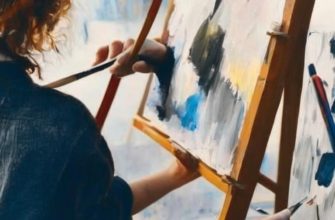

One of the most common problems artists face is the fear of the blank page. Sometimes you sit down to create and nothing comes to mind. Your thoughts seem to vanish, and the clean sheet in front of you seems intimidating. But why do we feel this fear and how can we overcome it?
This fear is a complex problem with several causes. Let’s look at a few of them:
Fear of failure — a common fear among artists. They may worry that their work will not be good enough or will not live up to their own expectations. This fear can lead to procrastination and prevent them from starting a new project.
Fear of criticism — artists may worry that their work will be judged too harshly by others, which can make them hold back or not show their work at all.
Fear of losing interest. Some artists may start a project but then lose interest and not finish it. Like failure, this can keep them from starting new projects and exploring their creative abilities.
Perfectionism — in psychology, refers to the mindset that the ideal should and can be achieved, and that any work short of perfection is unacceptable. Perfectionism also includes an obsessive drive to eliminate any excess or unevenness in an object — for example, to make an uneven object smooth or to align objects precisely in space or with each other. This makes it hard to finish a work in peace: there will always seem to be things that could be fixed.
Fear of speaking your mind and opening your soul. Artists may worry that their works will reveal too much about themselves. This can lead to self-censorship and reluctance to create.
Although these fears are significant, the main cause of blank page syndrome is often a lack of experience and knowledge. It can be hard to express your thoughts and ideas through words or images, especially if you are not confident in your abilities.
The first step to overcoming the fear is to acknowledge that it is normal. Every artist experiences it at some point, and there is nothing shameful about it. Instead of letting fear take over, try to accept it and see it as an opportunity to push yourself creatively. Remember that a blank sheet is a canvas waiting for your imagination to bring it to life.
You can begin with a warm-up — it can be a useful way to get started. It could be a simple drawing exercise, such as sketching a still life or a figure, or even just doodling. The goal is not to create a masterpiece but to get your thoughts and hands moving and warm up your creativity. By doing this, you may find that the fear begins to fade.
Set small goals. Instead of trying to create a finished work of art in one sitting, break it down into smaller, manageable stages. For example, start with a rough sketch, then add details, and then work on shading and colour. By setting achievable goals, you gradually build confidence and momentum. This approach can work not only in drawing.
Start experimenting with different techniques and materials. If you usually work in a particular style, try something new. Explore different textures, colours and shapes to stimulate your imagination. You can also try combining different techniques or materials to create something unique.
A break can also be an effective way to overcome fear. Sometimes stepping away from your art and doing something else can help clear your mind and give you a fresh perspective. Go for a walk, read a book or watch a film — anything that helps you relax and recharge your creative energy.
Remember that not every idea has to be a masterpiece. Experimentation and exploration are part of the creative process, so allow yourself to make mistakes and try new things. Try to accept them and use them as an opportunity to learn and grow as an artist. Even great artists make mistakes along the way. Set off on the journey and enjoy the process of creating rather than focusing solely on the end result.
In conclusion, the fear of the blank page is common among artists. You can overcome it and unlock your creative potential. The most important thing is to keep creating, even if it is just one small step at a time.