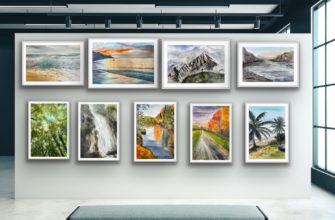

In the articles “What materials do you need for watercolor painting?” and “How to organise your workspace?” we learned about the basic materials. But what other art tools are there? In this article we will look at the types of easels and how they differ.
Artists rely on a whole range of materials to create their works, and the easel is one of them. An easel is a stand, usually made of wood, on which you place your painting or drawing while you work.
Let’s look at a few facts about how easels were used in the past. Originally, the word referred to the support for oil paintings made on wooden or copper panels. In the 11th–12th centuries easels were used in making altar stands or hangings, and in the 16th century — canvas stretched on a wooden frame. In the 19th century particleboard panels, which are more resistant to warping, were used as easels.
When choosing an easel, it is important to understand where you will mostly paint, as this determines the easel’s functionality. Easels can be divided into categories depending on whether they are suitable for indoor or outdoor use. The most common types of easels are the following.
Lyre easel
This is a triangular easel with a supporting back leg, which makes it convenient for use in tight spaces. It has a canvas holder at the top that lets you adjust the height and angle. Its advantages are a light yet sturdy construction, compact size, and ease of assembly and storage.
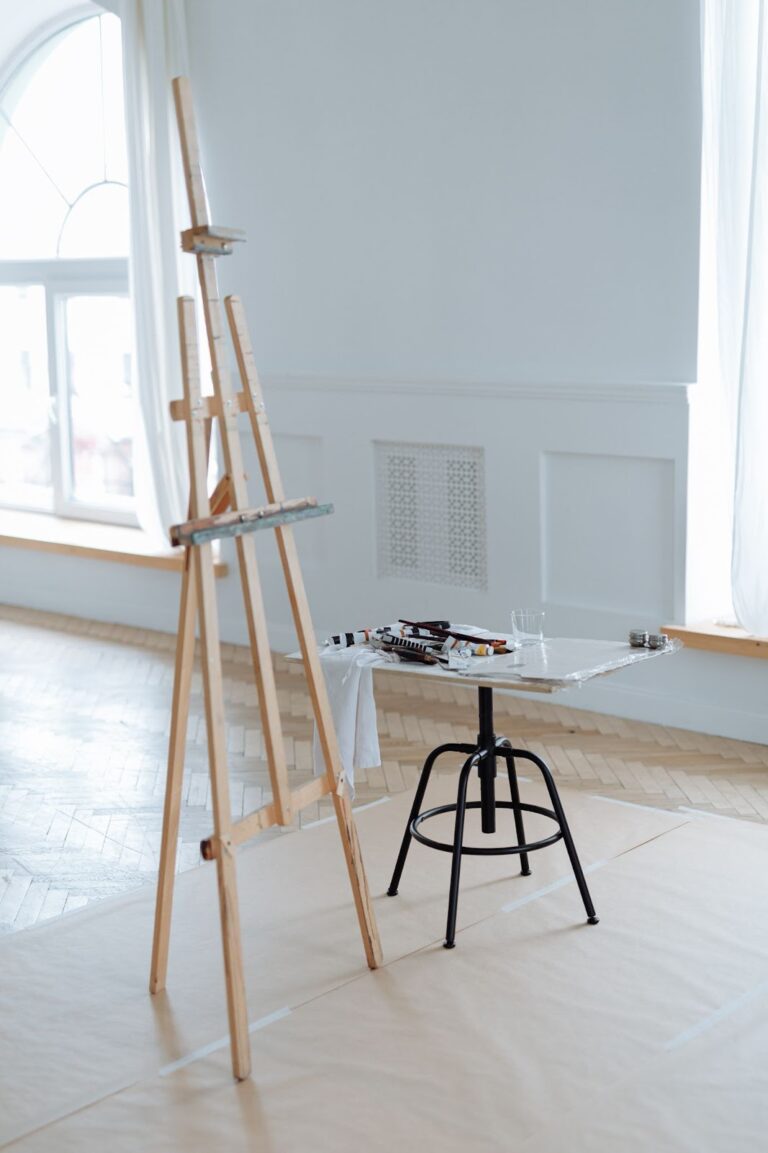
H-frame easel
It offers many settings that can be adjusted to each artist’s preferences. It can hold canvases of any size and heavy frames. However, its considerable weight and size make it hard to store in a limited space.

Convertible studio easel
This type of easel, also known as a hybrid easel, gives artists a high degree of versatility, allowing them to work with different techniques and materials. One of its notable features is the ability to tilt into a horizontal position, making it suitable for varnishing without removing the canvas. Hybrid easels also have a wide base and a top holder suitable for large formats. It is designed for permanent use in a studio.

Mast easel
It is designed to adjust the angle and height of the canvas and folds quickly and easily into a compact shape. Although it may not have the same strength and flexibility as traditional H-frame designs, it is still useful for exhibitions and suits small spaces such as flats or classrooms. It is also an ideal choice for those who only need it from time to time.

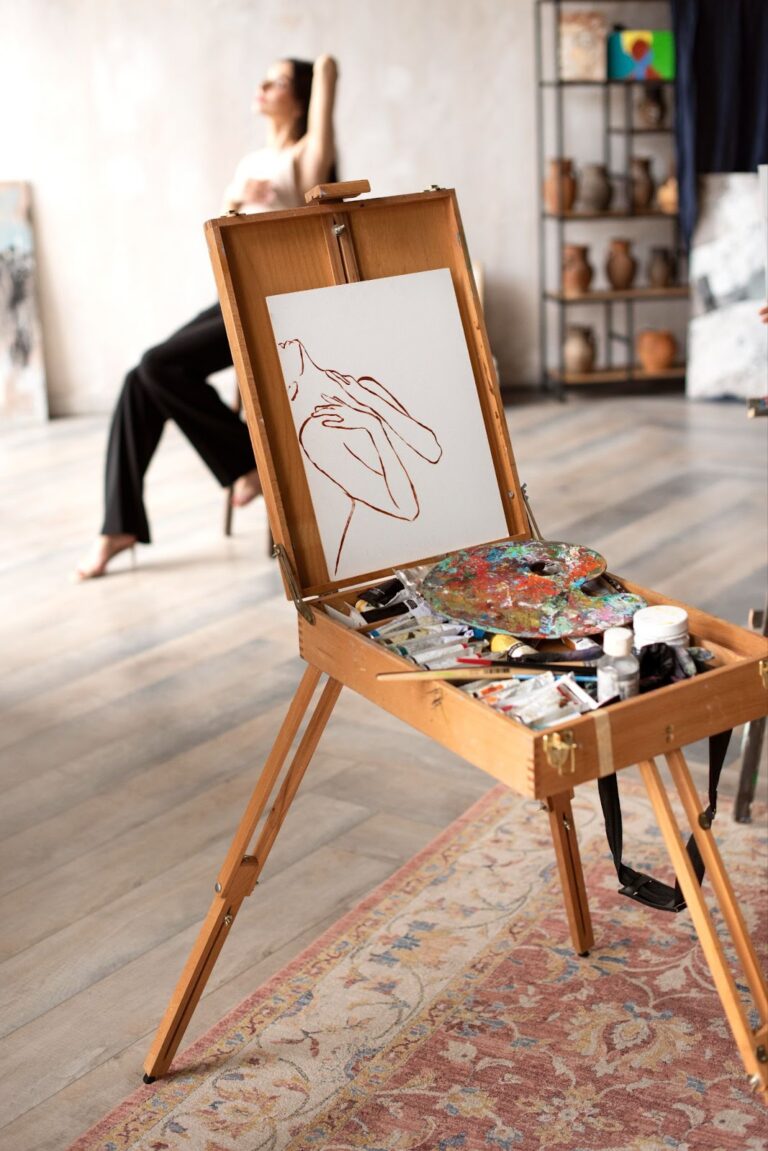
Sketch box easel
It is a hybrid of an easel and a box for storing materials. Its lid is a flat surface on which you can place a canvas or a board. The legs fold, so you can easily adjust the height and use it in different conditions — for example, for painting outdoors or as a tabletop easel in the studio. However, it limits the size of canvas and paper you can use.
Student easels
Also known as A-frame easels, they are affordable and have a simple design, small size and the ability to work on both sides at once. You can often see them in art studios, children’s art schools and so on. The easel consists of two plywood panels joined by movable legs at the top. Paper is attached with simple drawing pins, clips and tape. Sometimes the surface is made of a chalkboard for drawing with chalk.

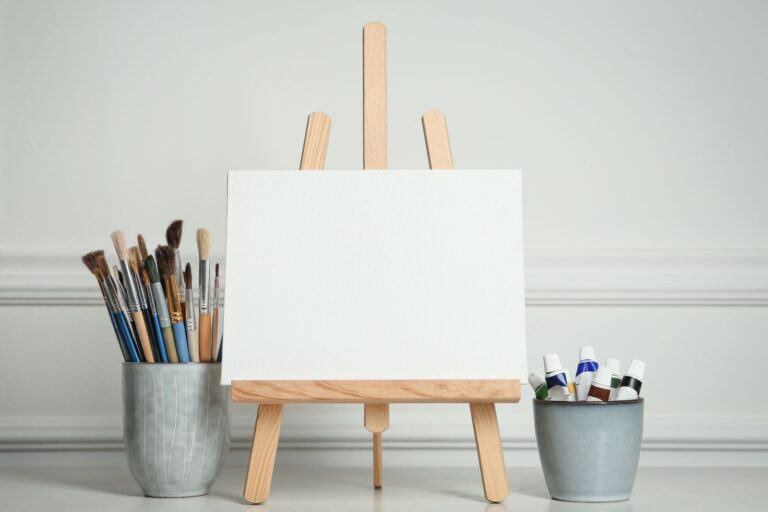
Tabletop easel
This is a small easel that can be placed on a desk or table. Its design is similar to a lyre or H-frame easel, but smaller, and it requires adjustment. It folds easily and can be stored for convenient transport. However, because of its compact size, a tabletop easel limits the size of canvas you can use.
Portable easel
Known as a tripod, it is designed for camping or plein airs and is lightweight, so it is easy to carry. It consists of three legs that fold and can be extended when needed. These easels are usually made either of aluminium tubing or of hardwood such as beech. They come with a canvas holder, a plastic clamp at the top and two holders on the front legs attached to a metal bar. The stretcher is placed on the bar and secured with the top clamp. When not in use, the easel can be folded and stored in a case.
Besides functionality, you can also consider aesthetics when choosing an easel. Many artists choose an easel that complements their workspace and artistic style. Easels come in different finishes, from natural wood to sleek metal, so you can choose the ideal option for your taste.
When it comes to buying an easel, several factors need to be considered. First, it is important to determine the size of the available workspace and what format you will be working in. Second, consider how often you will use it. For example, a professional artist who uses an easel every day may want to invest in a high-quality, durable option, while a beginner may prefer a more affordable and portable one.
You should also consider the material the easel is made of: wood or metal. A wooden easel looks beautiful and is high-quality, durable and practical. It can also be varnished to protect the wood from damage and moisture. An aluminium easel, on the other hand, is a practical choice because it resists moisture and corrosion. It can be used both indoors and outdoors, but it is not suitable for large canvases. Ultimately, the choice between a wooden and a metal easel depends on personal preference and intended use.
Easels can hold both canvases and drawing boards — but what is a drawing board for? It serves as a base for fixing and stretching paper or card, which are usually attached with drawing pins, tape, a stapler or rubber bands. Drawing boards are made using a special technology that avoids the need for pins and has smoothed corners, so you can stretch damp paper and card without damaging them. A board is ideal for technical drawing and drawing and can also be used as a base for decoration. Its construction is a sturdy frame of solid pine slats with a plywood sheet attached. They are suitable for both studio and plein air work.
To sum up, using an easel gives artists many advantages. For example, an inclined surface lets you make accurate drawings without perspective distortion. It also allows you to work flexibly, sitting or standing, reducing strain on your back and neck. Moreover, the design and tilt let you make longer, smoother strokes with your whole arm and work in larger formats. An easel also provides a safe place to dry a canvas, eliminating the risk of damage and giving you a dedicated space for creativity. Of course, an easel does not suit everyone’s artistic practice, but this knowledge can be valuable for those considering it as a tool and wanting to make an informed decision.
[wysija_form id=»1″]